研究成果
过滤器
搜索

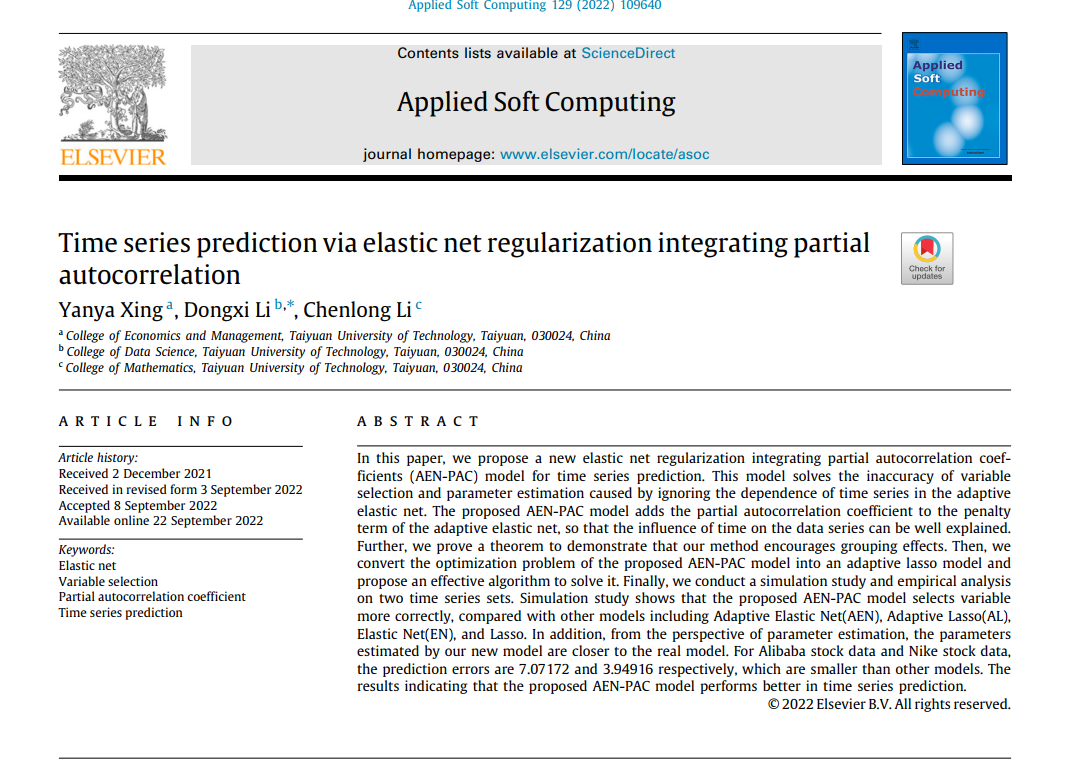
Xing Y., Li, D., & 李晨龙, (2022). Time series prediction via elastic net regularization integrating partial autocorrelation. Applied Soft Computing, 129, 109640.

In this paper, we propose a new elastic net regularization integrating partial autocorrelation coefficients (AEN-PAC) model for time series prediction. This model solves the inaccuracy of variable selection and parameter estimation caused by ignoring the dependence of time series in the adaptive elastic net. The proposed AEN-PAC model adds the partial autocorrelation coefficient to the penalty term of the adaptive elastic net, so that the influence of time on the data series can be well explained. Further, we prove a theorem to demonstrate that our method encourages grouping effects. Then, we convert the optimization problem of the proposed AEN-PAC model into an adaptive lasso model and propose an effective algorithm to solve it. Finally, we conduct a simulation study and empirical analysis on two time series sets. Simulation study shows that the proposed AEN-PAC model selects variable more correctly, compared with other models including Adaptive Elastic Net (AEN), Adaptive Lasso (AL), Elastic Net (EN), and Lasso. In addition, from the perspective of parameter estimation, the parameters estimated by our new model are closer to the real model. For Alibaba stock data and Nike stock data, the prediction errors are 7.07172 and 3.94916 respectively, which are smaller than other models. The results indicating that the proposed AEN-PAC model performs better in time series prediction.
Read More »

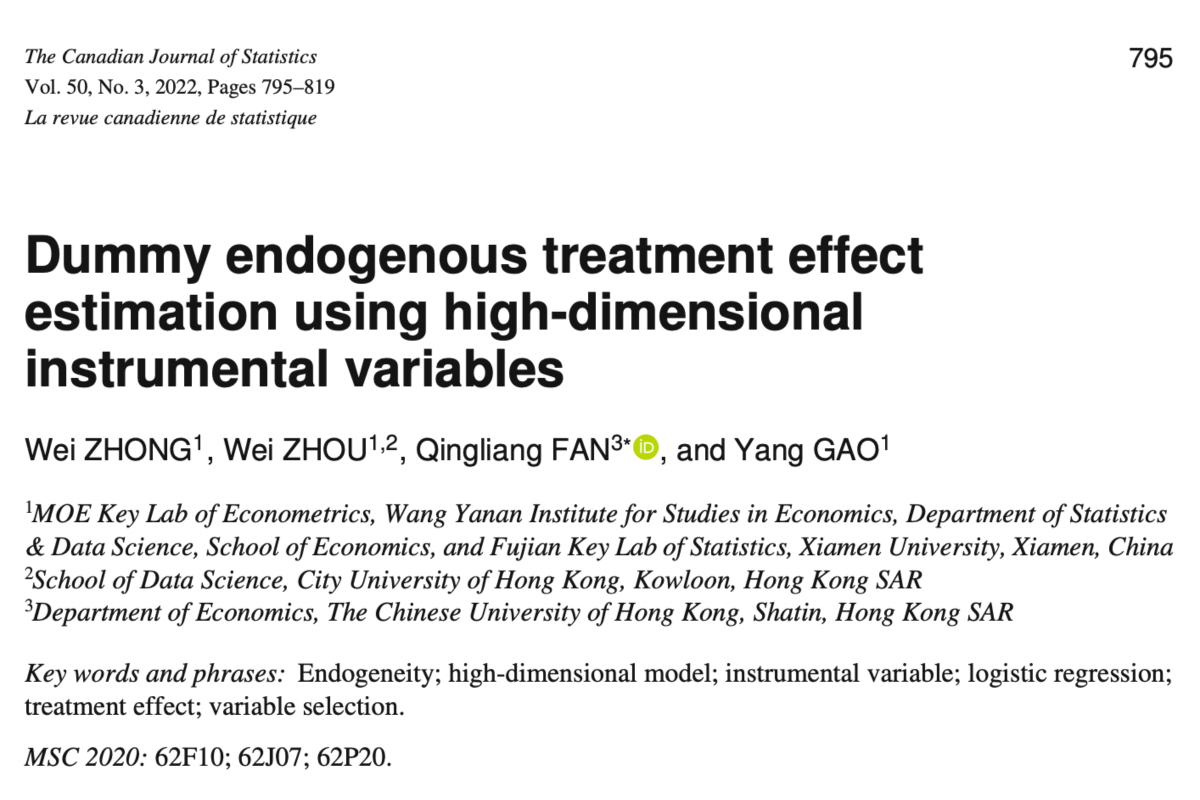
Zhong, W., 周玮, Fan, Q., & Gao, Y. (2022). Dummy endogenous treatment effect estimation using high‐dimensional instrumental variables. Canadian Journal of Statistics, 50, 795-819.

We develop a two-stage approach to estimate the treatment effects of dummy endogenous variables using high-dimensional instrumental variables (IVs). In the first stage, instead of using a conventional linear reduced-form regression to approximate the optimal instrument, we propose a penalized logistic reduced-form model to accommodate both the binary nature of the endogenous treatment variable and the high dimensionality of the IVs. In the second stage, we replace the original treatment variable with its estimated propensity score and run a least-squares regression to obtain a penalized logistic regression instrumental variables estimator (LIVE). We show theoretically that the proposed LIVE is root-n consistent with the true treatment effect and asymptotically normal. Monte Carlo simulations demonstrate that LIVE is more efficient than existing IV estimators for endogenous treatment effects. In applications, we use LIVE to investigate whether the Olympic Games facilitate the host nation’s economic growth and whether home visits from teachers enhance students’ academic performance. In addition, the R functions for the proposed algorithms have been developed in an R package naivereg. The Canadian Journal of Statistics 50: 795–819;

Read More »

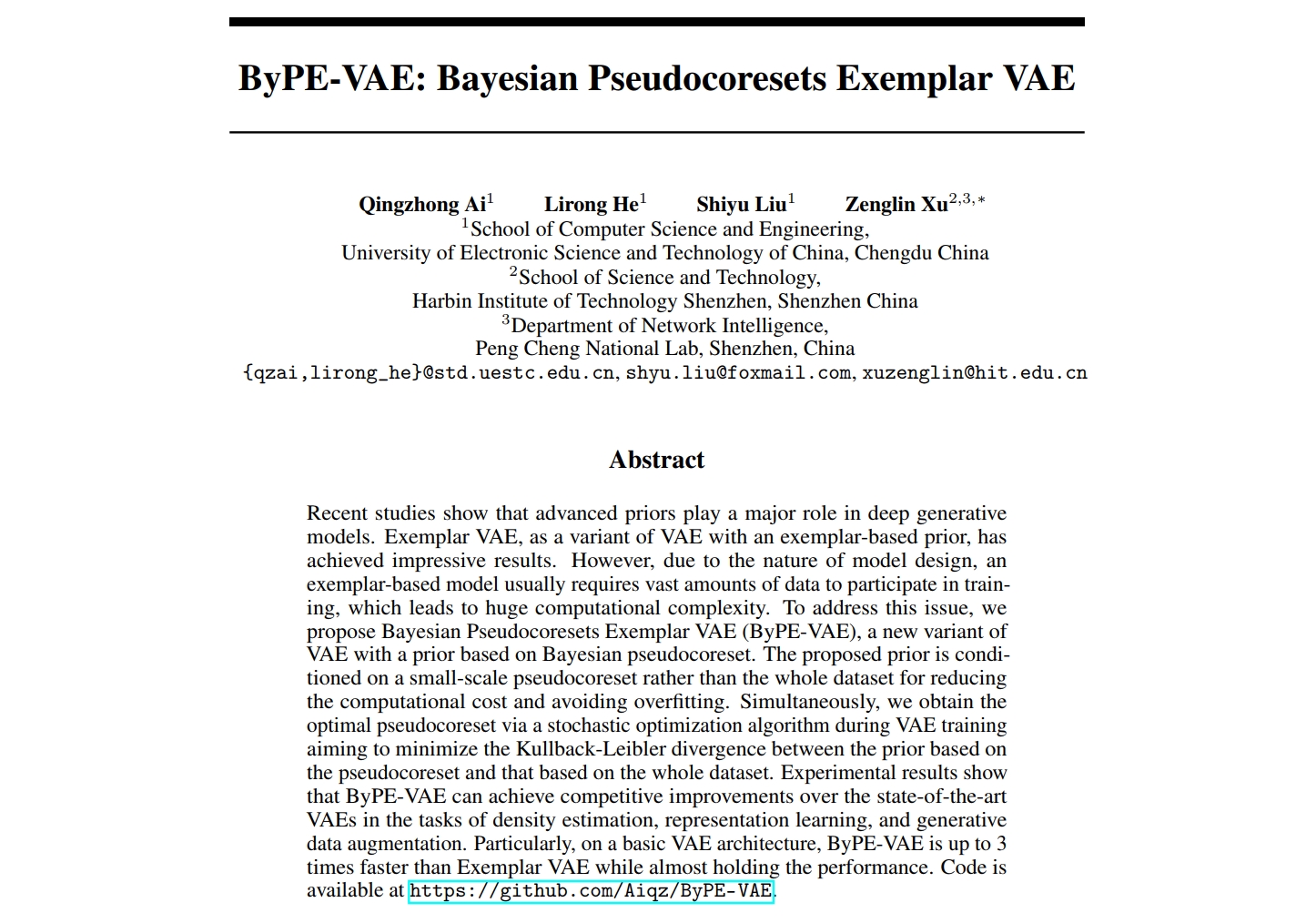
Ai, Q., He, L., 刘史毓, & Xu, Z. (2022). ByPE-VAE: Bayesian pseudocoresets exemplar VAE. Neural Information Processing Systems (NeurIPS).

Recent studies show that advanced priors play a major role in deep generativemodels. Exemplar VAE, as a variant of VAE with an exemplar-based prior, hasachieved impressive results. However, due to the nature of model design, anexemplar-based model usually requires vast amounts of data to participate in training, which leads to huge computational complexity. To address this issue, wepropose Bayesian Pseudocoresets Exemplar VAE (ByPE-VAE), a new variant of VAE with a prior based on Bayesian pseudocoreset. The proposed prior is condi.tioned on a small-scale pseudocoreset rather than the whole dataset for reducingthe computational cost and avoiding overfitting. Simultaneously, we obtain theoptimal pseudocoreset via a stochastic optimization algorithm during VAE trainingaiming to minimize the Kullback-Leibler divergence between the prior based onthe pseudocoreset and that based on the whole dataset. Experimental results showthat ByPE-VAE can achieve competitive improvements over the state-of-the-artVAEs in the tasks of density estimation, representation learning, and generativedata augmentation. Particularly, on a basic VAE architecture, ByPE-VAE is up to 3times faster than Exemplar VAE while almost holding the performance. Code isavailable at https://github.com/Aiqz/ByPE-VAE.

Read More »

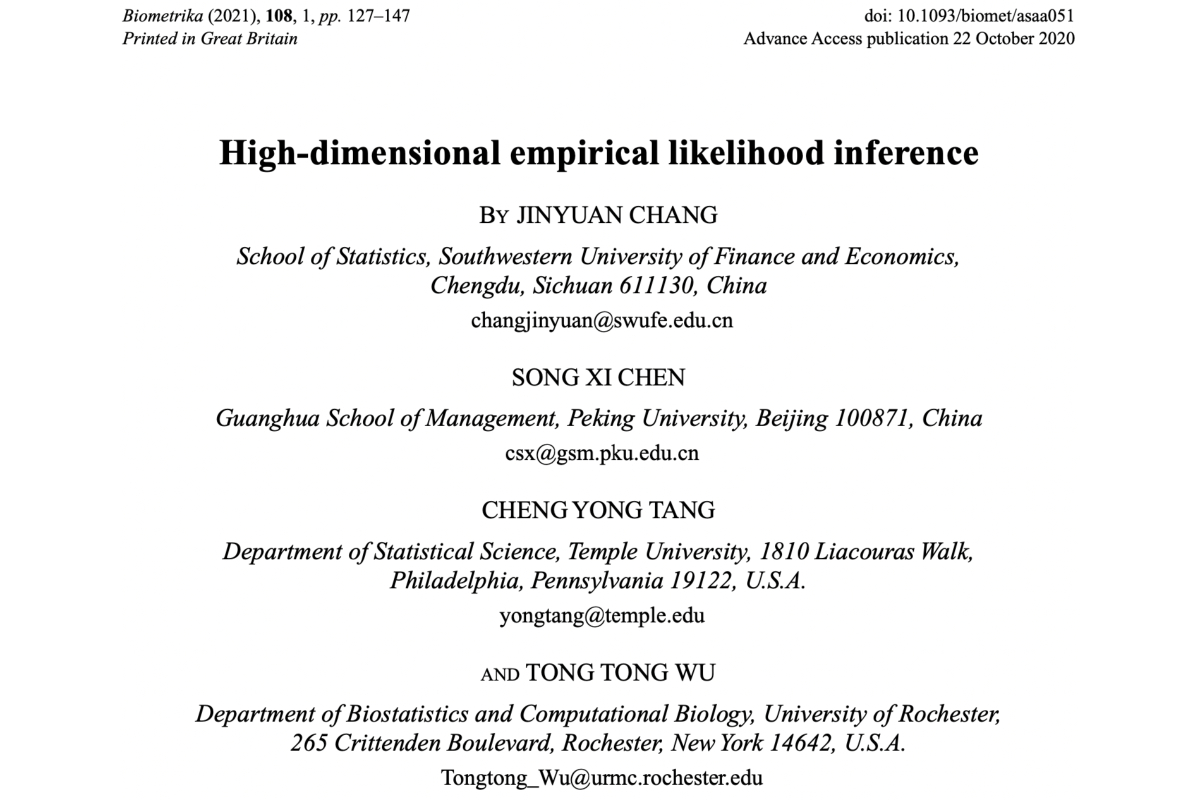
常晋源, Chen, S. X., Tang, C. Y., & Wu, T. T. (2021). High-dimensional empirical likelihood inference. Biometrika, 108, 127-147.

High-dimensional statistical inference with general estimating equations is challenging and remains little explored. We study two problems in the area: confidence set estimation for multiple components of the model parameters, and model specifications tests. First, we propose to construct a new set of estimating equations such that the impact from estimating the high-dimensional nuisance parameters becomes asymptotically negligible. The new construction enables us to estimate a valid confidence region by empirical likelihood ratio. Second, we propose a test statistic as the maximum of the marginal empirical likelihood ratios to quantify data evidence against the model specification. Our theory establishes the validity of the proposed empirical likelihood approaches, accommodating over-identification and exponentially growing data dimensionality. Numerical studies demonstrate promising performance and potential practical benefits of the new methods.

Read More »

Zheng, X., Guo, B., 何婧, & Chen, S. X. (2021). Effects of corona virus disease‐19 control measures on air quality in North China. Environmetrics, 32, e2673.

Corona virus disease-19 (COVID-19) has substantially reduced human activities and the associated anthropogenic emissions. This study quantifies the effects of COVID-19 control measures on six major air pollutants over 68 cities in North China by a Difference in Relative-Difference method that allows estimation of the COVID-19 effects while taking account of the general annual air quality trends, temporal and meteorological variations, and the spring festival effects. Significant COVID-19 effects on all six major air pollutants are found, with NO2 having the largest decline (−39.6%), followed by PM2.5 (−30.9%), O3 (−16.3%), PM10 (−14.3%), CO (−13.9%), and the least in SO2 (−10.0%), which shows the achievability of air quality improvement by a large reduction in anthropogenic emissions. The heterogeneity of effects among the six pollutants and different regions can be partly explained by coal consumption and industrial output data.

Read More »

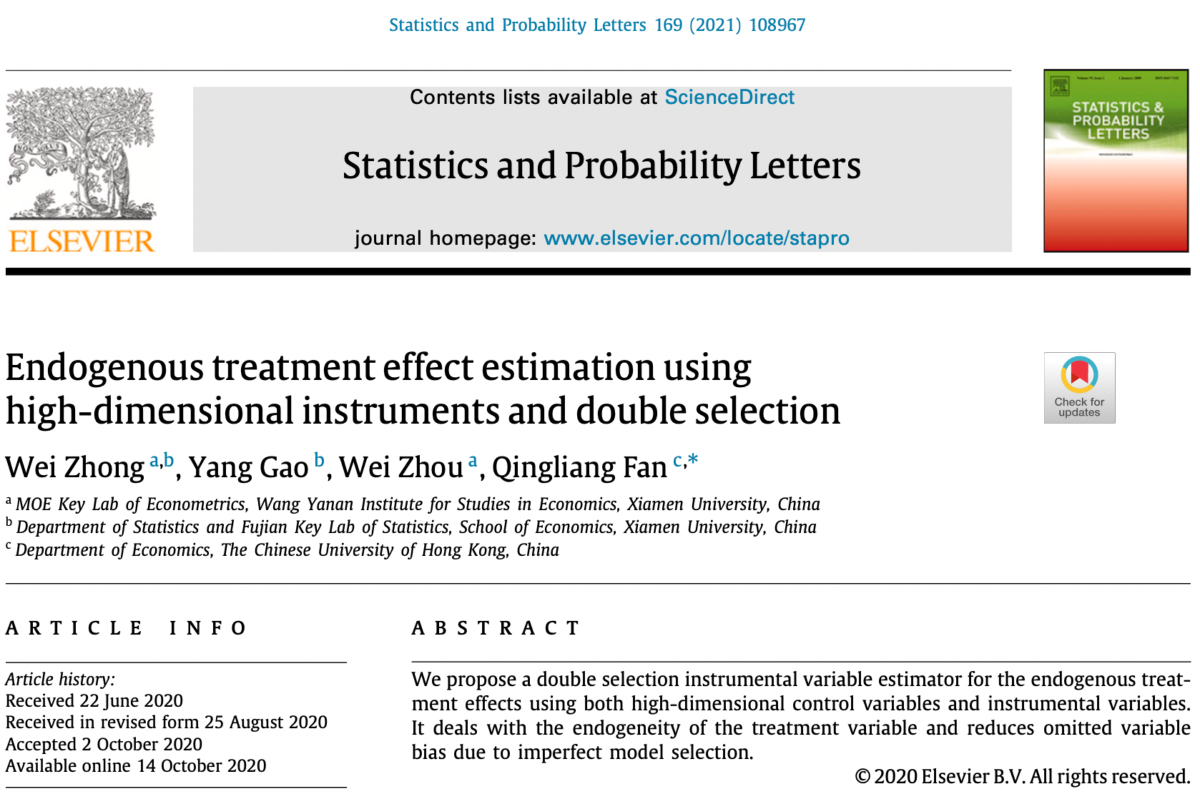
Zhong, W., Gao, Y., 周玮, & Fan, Q. (2021). Endogenous treatment effect estimation using high-dimensional instruments and double selection. Statistics & Probability Letters, 169, 108967.

We propose a double selection instrumental variable estimator for the endogenous treat- ment effects using both high-dimensional control variables and instrumental variables. It deals with the endogeneity of the treatment variable and reduces omitted variable bias due to imperfect model selection.

Read More »

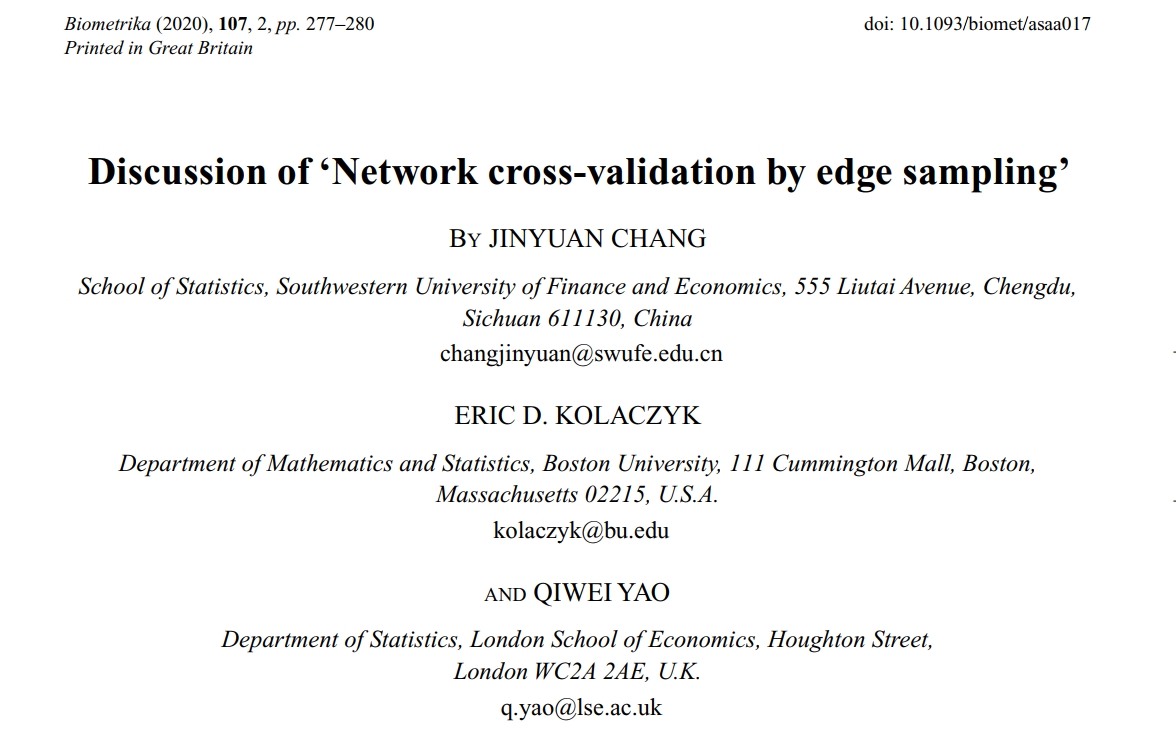
常晋源, Kolaczyk, E. D. & Yao, Q. (2020). Discussion of ‘Network cross-validation by edge sampling’. Biometrika, 107, 277-280.

We thank the authorsfor their new contribution to networkmodelling.Datareuse, encompassingmethods such as bootstrapping and cross-validation, is an area that to date has largely resisted obvious and rapid development in the network context. One of the major reasons is that mimicking the original sampling mechanisms is challenging if not impossible. To avoid deleting edges and destroying some of the network structure, the resampling strategy proposed in Li et al. (2020) based on splitting node pairs rather than nodes is therefore insightful and effective. Matrix completion is the key technique involved, with its use here providing a new perspective for network analysis.

Read More »

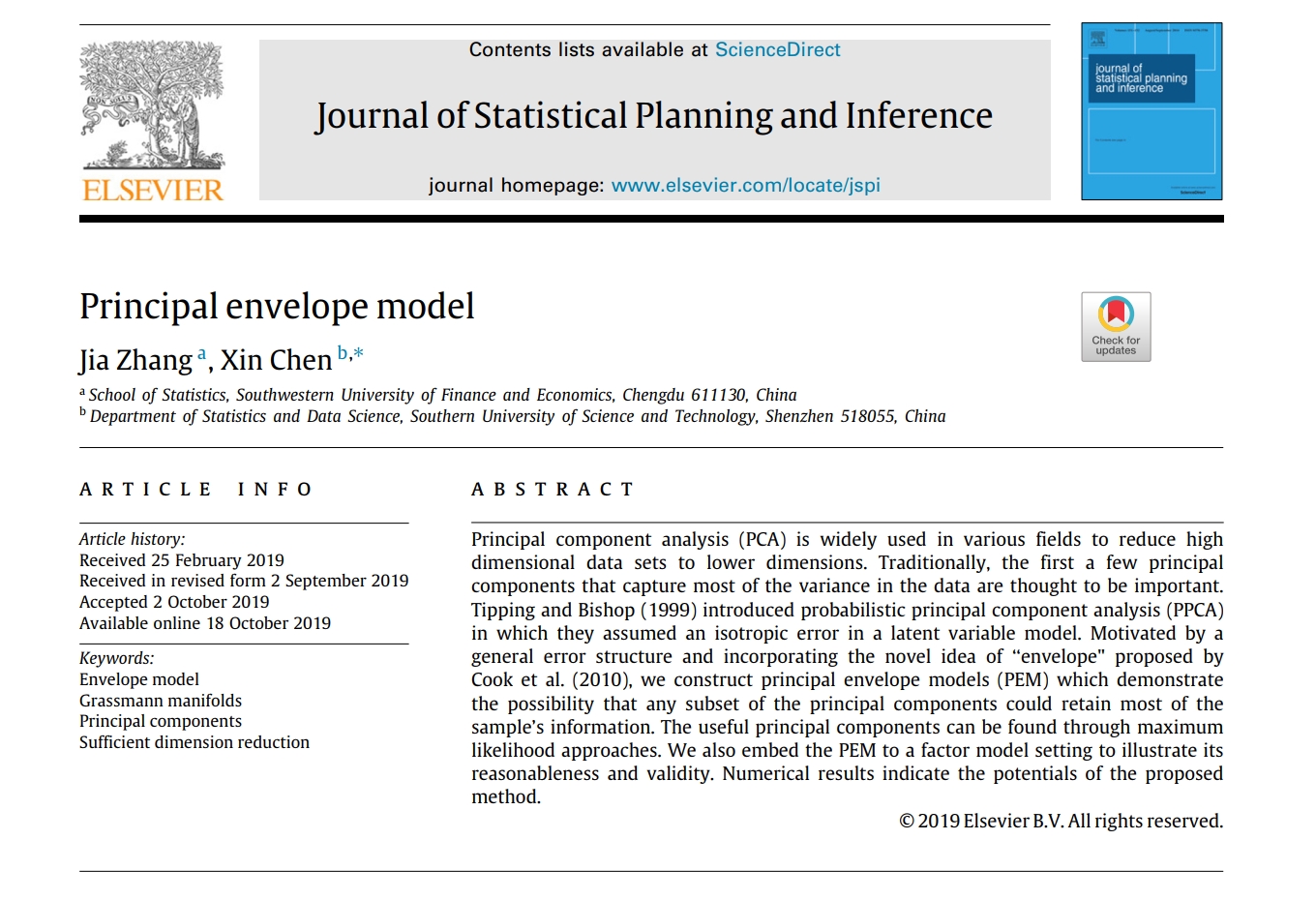
张佳, & Chen, X. (2020). Principal envelope model. Journal of Statistical Planning and Inference, 206, 249-262.

Principal component analysis (PCA) is widely used in various fields to reduce high dimensional data sets to lower dimensions. Traditionally, the first a few principal components that capture most of the variance in the data are thought to be important. Tipping and Bishop (1999) introduced probabilistic principal component analysis (PPCA) in which they assumed an isotropic error in a latent variable model. Motivated by a general error structure and incorporating the novel idea of ‘‘envelope” proposed by Cook et al. (2010), we construct principal envelope models (PEM) which demonstrate the possibility that any subset of the principal components could retain most of the sample’s information. The useful principal components can be found through maximum likelihood approaches. We also embed the PEM to a factor model setting to illustrate its reasonableness and validity. Numerical results indicate the potentials of the proposed method.

Read More »

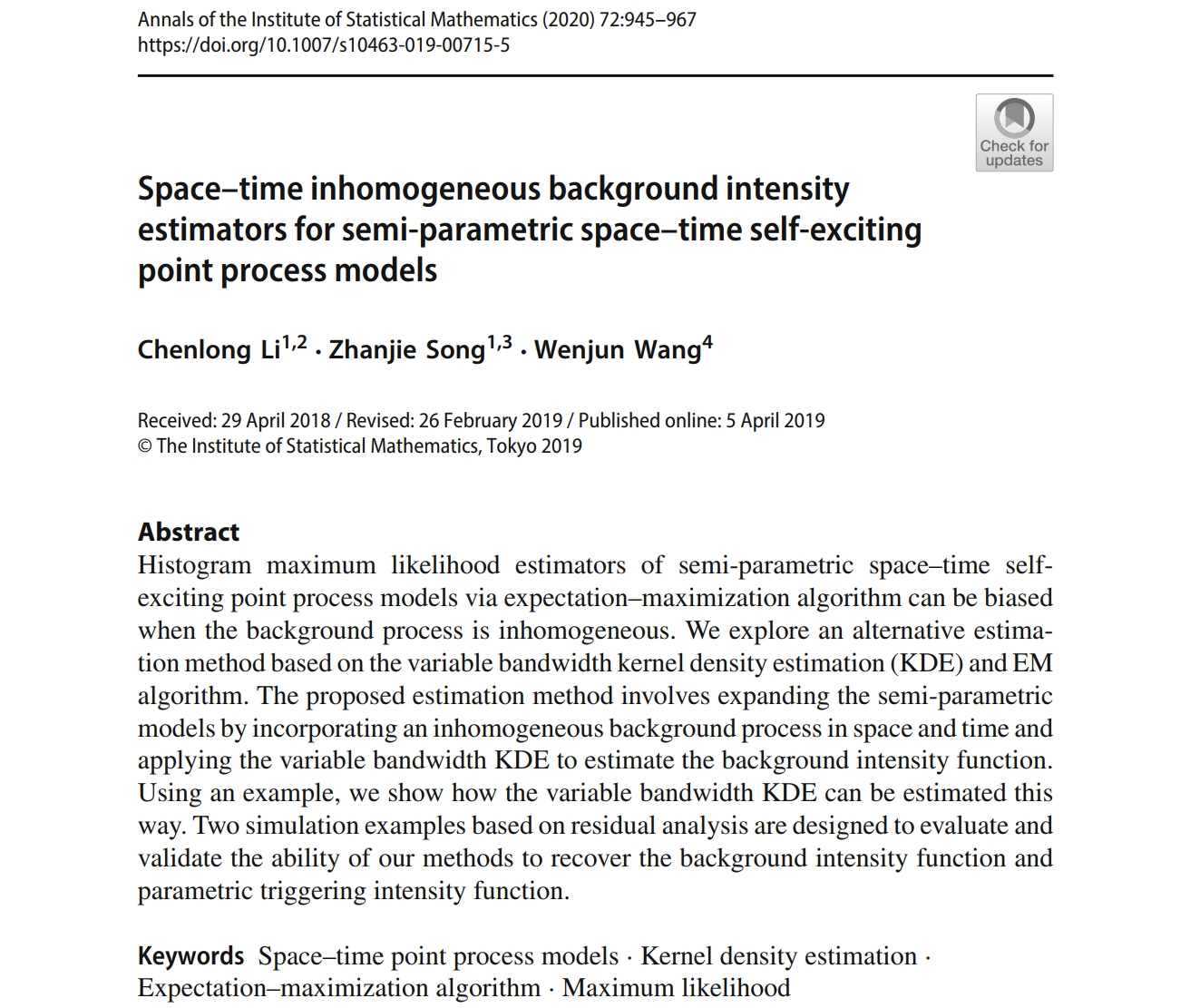
李晨龙, Song, Z., & Wang, W. (2020). Space-time inhomogeneous background intensity estimators for semi-parametric space-time self-exciting point process models. Annals of the Institute of Statistical Mathematics, 72, 945-967.

Histogram maximum likelihood estimators of semi-parametric space–time selfexciting point process models via expectation–maximization algorithm can be biased when the background process is inhomogeneous. We explore an alternative estimation method based on the variable bandwidth kernel density estimation (KDE) and EM algorithm. The proposed estimation method involves expanding the semi-parametric models by incorporating an inhomogeneous background process in space and time and applying the variable bandwidth KDE to estimate the background intensity function. Using an example, we show how the variable bandwidth KDE can be estimated this way. Two simulation examples based on residual analysis are designed to evaluate and validate the ability of our methods to recover the background intensity function and parametric triggering intensity function.

Read More »